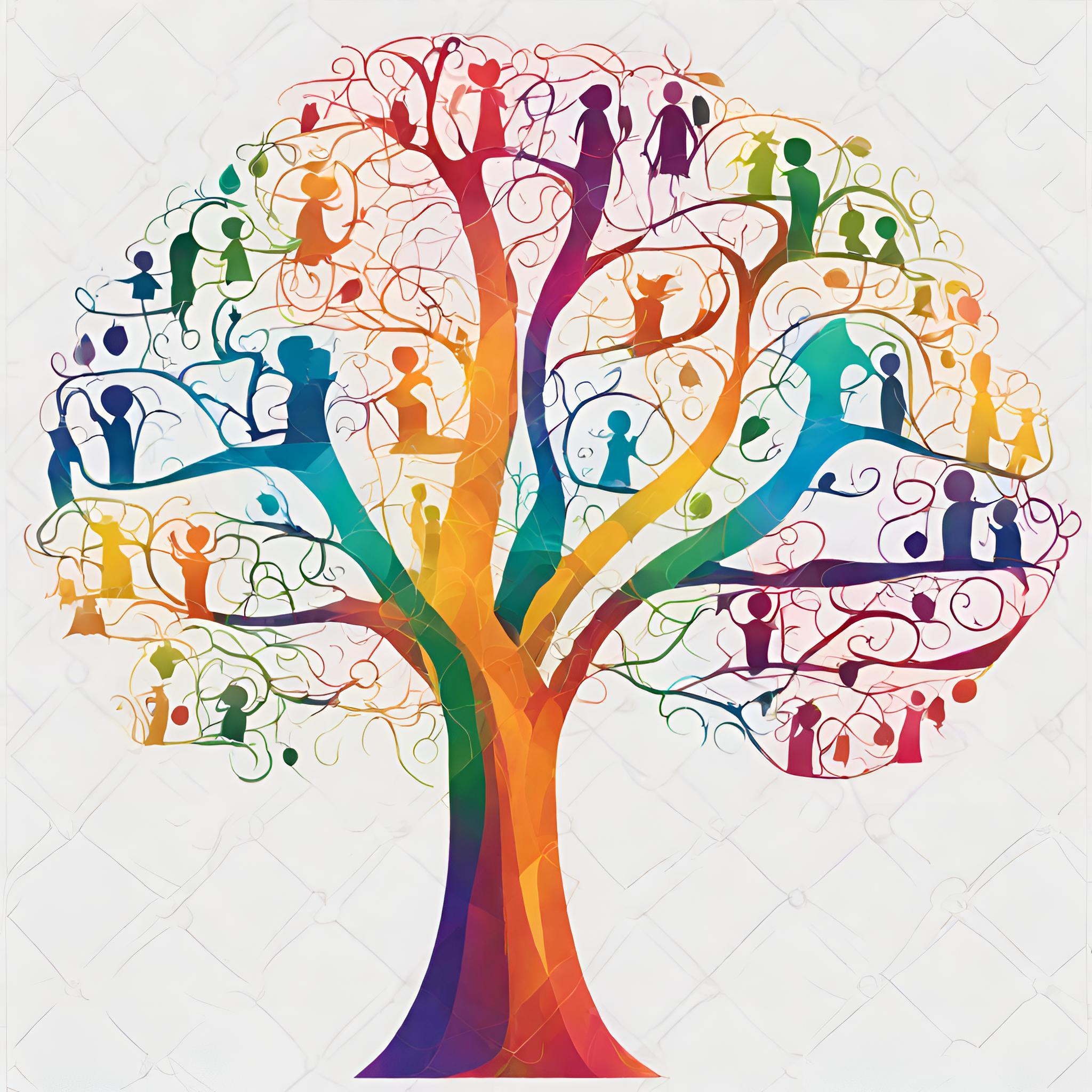
What Are Family Constellations?
Family Constellations is a therapeutic approach developed by German psychotherapist Bert Hellinger in the 1990s, drawing from his years of work across cultures, family therapy traditions, and phenomenological philosophy. At its heart, the work rests on a profound insight: we are not only shaped by our own personal experiences, but also by the unresolved pain, trauma, and interrupted loyalties carried by those who came before us.
The approach recognizes that family systems operate according to their own ordering principles — bonds of love and belonging that persist across generations. When someone in a family line has been excluded, forgotten, or their fate left unmourned, later generations may unconsciously repeat or carry the weight of those unresolved experiences. Constellations work makes these invisible dynamics visible, creating an opportunity for acknowledgment, compassion, and release.
As a second-generation Croatian with Scottish roots, I carry a deep personal understanding of how ancestry, community, and the natural world shape who we are. This lived connection to lineage and heritage informs the reverence I bring to this work.
"The love that binds families together can also bind them to suffering — until the suffering is seen, honored, and allowed to rest."
The Science Behind the Work
Modern research in epigenetics, developmental psychology, and trauma neuroscience offers compelling evidence for what Constellations practitioners have long observed. Studies in epigenetics — including pioneering research at institutions like Mount Sinai Hospital — have demonstrated that trauma leaves biological marks on genes that can be inherited by children and grandchildren.
Dr. Bessel van der Kolk's landmark work on how the body holds trauma, along with research by Dr. Rachel Yehuda on intergenerational PTSD in Holocaust survivors and their descendants, points to the same truth: unprocessed pain does not simply disappear. It finds expression in the bodies, behaviors, and relationships of future generations.
Constellations work engages this inherited material not through analysis or retelling, but through embodied awareness — allowing the nervous system to sense and respond to family dynamics in a gentle, contained way that honors both the personal and the ancestral.
— Bert Hellinger
The Orders of Love
Hellinger observed that family systems are governed by three fundamental principles, which he called the Orders of Love:
- Belonging: Every member of a family system has a right to belong. When someone has been excluded, forgotten, or rejected — whether through shame, tragedy, or silence — others in the system may unconsciously carry or re-enact their fate.
- Order: Each person in a family holds a particular place. When those roles become confused or displaced — a child carrying the burden of a parent, for instance — the natural order is disrupted, often with lasting effects.
- Balance of giving and taking: Healthy relationships rest on a flow of exchange. Imbalances — especially those tied to trauma, sacrifice, or unacknowledged debt — can weigh heavily across generations.
Recognizing how these principles may be playing out in your own life can bring profound clarity and a sense of compassionate release.
A Family System — Seen Across Generations
Every node in your family system carries experiences that ripple forward through time.
How the Work Unfolds
Family Constellations can be facilitated in individual sessions or in group settings. In an individual session, objects, figurines, or floor markers may be used to represent family members, creating a spatial "map" of the system. In group work, participants may be invited to represent different family members, allowing the dynamics of the system to emerge through movement, posture, and felt sense.
The process is guided by curiosity, compassion, and a deep respect for the wisdom already present within each person and their lineage. There is no script and no predetermined outcome — the work follows what wants to be seen and what is ready to be healed.
Ground & Prepare
We create a safe, centered space and clarify what you are hoping to understand or shift in your family system.
Set Up the Field
Using representative objects or figures, we place family members in relationship to one another and observe what emerges.
Follow the Movement
We track impulses, sensations, and shifts — allowing the system's hidden dynamics to reveal themselves naturally.
Acknowledge & Release
Through words of acknowledgment and compassionate honoring, we support the system to find a more peaceful, loving order.
What This Work Can Help With
Family Constellations is a versatile and profound modality that may be helpful for a wide range of concerns:
Patterns That Repeat Across Generations
- Recurring relationship difficulties or painful dynamics
- Unexplained feelings of grief, guilt, or burden
- Family patterns of addiction, illness, or early loss
- A sense of not quite belonging — to your family, culture, or life
Personal & Relational Healing
- Difficulty with intimate partnerships or parenting
- Estrangement from family members
- Grief for ancestors you never knew
- Conflict between your personal identity and your family of origin
Ancestral & Cultural Wounds
- Trauma carried from war, displacement, or migration
- The legacy of cultural or collective trauma
- Longing to reconnect with cultural roots and ancestral wisdom
- Healing colonial or historical wounds within your lineage
A Note on Trauma-Informed Constellations
In my practice, Family Constellations is always held within a trauma-informed framework. We move gently, at your pace, with careful attention to your nervous system and emotional safety. The goal is not to retraumatize but to bring compassionate awareness — allowing what has been hidden in the system to finally be seen and honored.
The Gifts of Ancestral Healing
While we cannot change what happened in the past, we can change our relationship to it. When we turn toward our ancestors with compassion — acknowledging their pain without being consumed by it — something shifts. Heavy loyalties can soften. Burdens that were never ours to carry can be set down. And in their place, something else often arises: a sense of belonging, of being held by all those who came before, of receiving the good that was always there alongside the pain.
This work does not ask you to excuse or minimize harm. It asks only that you see your family system with honesty, and meet it — and yourself — with compassion. From that place, healing becomes possible not only for you, but for those who come after you.